

How to Maximize ROI from Facebook Ad Targeting
Launching a Facebook ad campaign without nailing your targeting is like shouting into the void and hoping your ideal customer hears you. Too often, marketers burn through their budget reaching people who will never convert. This guide will walk you through the practical, actionable strategies you need to refine your Facebook ad targeting, reach the right audience, and finally see a real return on your investment.
Start with Your Ideal Customer Profile
Before you even open Facebook Ads Manager, you need crystal-clear clarity on who you're trying to reach. The strongest targeting is built on a deep understanding of your Ideal Customer Profile (ICP). This goes beyond basic demographics like age and gender.
Ask yourself these questions:
- What are their biggest pain points and challenges (that my product solves)?
- What are their goals and aspirations?
- What publications do they read, influencers do they follow, or brands do they admire?
- What tools or software do they use in their daily life or work?
- What is their job title or level of seniority?
Answering these questions gives you a list of specific, tangible interests, behaviors, and titles to plug into Ads Manager. Instead of generic targeting like "small business owners," you can target people who list their job title as "Founder," are admins of a Facebook Business Page, and show interest in SaaS tools like HubSpot or Mailchimp.
Mastering the 3 Core Facebook Audiences
Facebook's targeting capabilities can be broken down into three main categories. Maximizing your ROI means knowing when and how to use all three in concert.
Free PDF · the crash course
AI Agents for Marketing Crash Course
Learn how to deploy AI marketing agents across your go-to-market — the best tools, prompts, and workflows to turn your data into autonomous execution without writing code.
1. Saved Audiences: Reaching New People
This is the foundation of "cold" audience targeting, where you build a profile based on demographics, interests, and behaviors. While it’s the broadest category, you can get incredibly specific to improve your ROI.
Tip 1: Layer Your Interests with “AND” Logic
Most beginners make the mistake of adding dozens of interests to one campaign. This creates "OR" logic, meaning Facebook will target someone interested in any one of those things. The result? A massive, unfocused audience.
Instead, use the "Narrow Audience" feature to create "AND" logic. This forces Facebook to only show your ad to people who match multiple criteria. For example, instead of targeting people who like "running gear" OR "Nike" OR "Marathons," you can target people who like "Marathons" AND "Garmin." This simple step dramatically increases the quality of your audience by finding the most dedicated enthusiasts.
Tip 2: Use Strategic Exclusions
Exclusions are just as powerful as inclusions for improving ROI. If you sell a high-end product, you might want to exclude users who have shown interest in budget brands. If you're running a lead generation campaign for a B2B service, you might exclude certain job titles (like "intern" or "student") or industries that aren't a good fit.
2. Custom Audiences: Retargeting Warm Leads
This is where advertisers often see their highest returns. Custom Audiences allow you to retarget people who have already interacted with your brand in some way. These aren't cold leads, they’re familiar with you and are therefore far more likely to convert.
Top High-ROI Custom Audiences:
- Website Visitors (via Meta Pixel): Install the Meta Pixel on your website to track user behavior. You can create audiences of everyone who has visited your site in the last 30, 60, or 90 days. For even better ROI, get more granular. Create a custom audience for people who viewed your pricing page but didn't sign up, or people who visited specific product pages.
- Abandoned Carts: The classic high-ROI campaign. Use the pixel to create an audience of people who added a product to their cart but didn't complete the purchase. Target them with a powerful reminder, a bit of scarcity ("Only 2 left in stock!"), or a small incentive to close the sale.
- Video Viewers: If you run video ads, you can create audiences based on how much of your video someone watched. Showcasing your ad to someone who watched 75% or 95% of your last video is far more effective than targeting a cold audience.
- Social Media Engagers: Create an audience of people who have liked, commented on, saved, or shared one of your posts on Facebook or Instagram. This is a highly engaged group of people who are already signaling interest in what you're doing.
- Customer List: You can upload your customer email or phone number list to Facebook. This is incredibly powerful for two reasons. First, you can create campaigns to upsell or cross-sell existing customers. Second, you can exclude them from your prospecting campaigns to avoid wasting ad spend on people you've already acquired.
3. Lookalike Audiences: Scaling Your Success
Once you've identified a high-performing Custom Audience, you can use it to create a Lookalike Audience. Facebook will analyze the traits of your source audience (e.g., your best customers) and find millions of other users who share those same characteristics.
Building Effective Lookalike Audiences:
- Quality In, Quality Out: A Lookalike Audience is only as good as its source. A lookalike based on an audience of "All Website Visitors" will be less effective than one based on "Customers with a Lifetime Value over $500." Always build your Lookalikes from your highest-value custom audiences first - those who have purchased, submitted a high-value lead form, or have the highest LTV.
- Start with 1% and Expand: When creating a Lookalike Audience, you choose a percentage. A 1% lookalike in a given country means you are targeting the top 1% of Facebook users in that country who are most similar to your source audience. This is the most potent group. As you scale your budget, you can test expanding to 2%, 3%, or even 5% lookalikes, but start with the highly targeted 1% to maximize your initial ROI.
- Don’t Set and Forget: Lookalike audiences can become 'stale' over time as user behavior changes. It's good practice to refresh your Lookalike Audiences every month or so, especially if the source custom audience is consistently growing with new customers or leads.
A Simple Framework for Testing and Optimization
Even with these strategies, you need to test what works for your specific business. Don't throw all your budget behind one audience without validating it first.
Isolate Your Variables
When testing audiences, keep your ad creative and copy the same across all ad sets. If you change the audience and the ad at the same time, you'll never know which change was responsible for the lift (or dip) in performance. The goal is to set up a CBO (Campaign Budget Optimization) campaign and have different ad sets with different audiences - one for your best Lookalike, one for your layered interest group, and one for a broad, high-value Custom Audience, for instance.
Free PDF · the crash course
AI Agents for Marketing Crash Course
Learn how to deploy AI marketing agents across your go-to-market — the best tools, prompts, and workflows to turn your data into autonomous execution without writing code.
Focus on the Right Metrics
Vanity metrics like impressions, reach, or even link clicks won't tell you anything about your ROI. The metrics that truly matter are:
- Cost Per Acquisition (CPA): How much does it cost you, on average, to acquire one new customer or lead?
- Return on Ad Spend (ROAS): For every dollar you spend on ads, how many dollars in revenue are you generating? A ROAS of 3x means you made $3 for every $1 spent.
This is your north star. If an interest-based audience has a great click-through rate but a terrible ROAS, it's not working. Cut it and reallocate that budget to the audiences that are actually driving profitable sales.
Always review your Facebook Ads data alongside your other conversion platforms, whether that's your Shopify store or CRM data. Facebook's attribution numbers tell part of the story, but the full picture of ROI lives in your actual sales and CVM (customer value model) data.
Final Thoughts
Maximizing your ROI on Facebook Ads isn't about some secret hack, it’s about a methodical process. It starts with deeply understanding your customer, then methodically using Custom Audiences to connect with warm leads, Saved Audiences to find new ones, and Lookalike Audiences to scale what's already working. By testing systematically and focusing on business outcomes like ROAS, you can turn your Facebook ad account into a truly profitable growth engine.
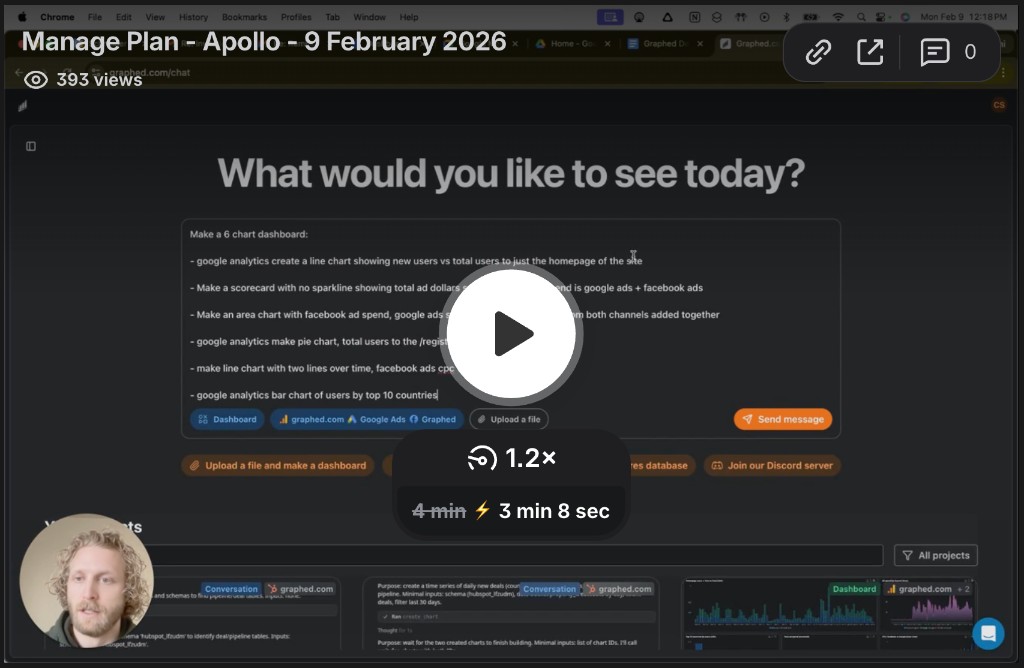
Of course, analyzing all this data to calculate your true ROI can be a headache. You're constantly logging into Facebook Ads Manager, then Google Analytics, then Shopify, and trying to mash all the data together in a spreadsheet. We built Graphed to stop that manual work. Simply connect your accounts in a few clicks, and then you can ask questions in plain English like, "show me my Facebook ROAS by campaign next to Shopify sales for the last 30 days." Graphed instantly builds you a real-time dashboard so you can find the answers you need in seconds, not hours.
Related Articles
How to Create Facebook Ads API for Claude Code
Create a Meta Marketing API access token that never expires, using a system user, so Claude Code can pull Facebook ad reports and manage campaigns.
ClickHouse vs Postgres: When to Switch to Columnar
Comparing ClickHouse vs PostgreSQL means matching storage architecture to workload. Row storage wins for transactions. Columnar wins for scan-heavy analytics.
Google Ads for Orthodontists: Get More Booked Consults
Most orthodontic Google Ads campaigns waste money on low-intent searches. The problem is structure, not the platform.