

How to Get the Most Out of Your Facebook Ad
Running Facebook Ads can feel like throwing money into a black hole if you don’t have a clear strategy. You launch a campaign, cross your fingers, and hope for the best, but the results are often underwhelming. This guide cuts through the noise and provides a practical framework for creating, structuring, and analyzing your campaigns to deliver real results. We'll cover everything from nailing your audience to asking the right questions about your data.
Nail Your Audience Before You Write a Single Word
The most visually stunning ad with the most compelling copy will fail miserably if it's shown to the wrong people. Your audience is the foundation of your entire campaign. Getting this part right makes everything else dramatically easier.
Go Beyond Basic Demographics
Targeting "women aged 25-40 who live in California" is a start, but it's far too broad. Facebook's real power lies in its ability to target based on interests, behaviors, and life events. Think about the specific problems your product solves and who feels that pain most acutely.
- Interests: Are your customers passionate about specific hobbies (e.g., sustainable living, HIIT workouts), public figures (e.g., Marie Forleo, Tim Ferriss), or brands (e.g., Lululemon, Shopify)?
- Behaviors: You can target based on purchase behavior ("Engaged Shoppers"), device usage (e.g., iPhone 15 Pro users), or travel habits (e.g., Frequent International Travelers).
- Psychographics: What are their values, attitudes, and lifestyles? What kind of content do they consume? What online communities are they a part of?
Build a detailed customer persona. Give them a name. Imagine a day in their life. The clearer this picture is, the more effectively you can speak directly to them in your ads.
Master Lookalike Audiences
A Lookalike Audience is an incredibly powerful tool that lets Facebook find new people who are similar to your best existing customers. You provide a "source audience," and Facebook's algorithm finds users who share similar characteristics. If you're not using these, you're leaving money on the table.
Your best source audiences are those with the highest value to your business:
- Customer List: Export a list of your past purchasers (with lifetime value, if possible) and upload it to Facebook. This creates an extremely high-quality Lookalike.
- Pixel Converters: Create an audience of people who have completed a key action on your website, like "Purchase" or "Lead."
- High-Engagement Users: You can create audiences of people who have watched a high percentage of your videos or who frequently engage with your Facebook Page or Instagram Profile.
Start with a 1% Lookalike, which finds the 1% of users in your target country who are most similar to your source audience. Once you've found success, you can test broader Lookalikes (e.g., 3% or 5%).
Free PDF · the crash course
AI Agents for Marketing Crash Course
Learn how to deploy AI marketing agents across your go-to-market — the best tools, prompts, and workflows to turn your data into autonomous execution without writing code.
Use Retargeting with Precision
Retargeting - showing ads to people who have already interacted with your brand - delivers some of the highest returns on ad spend. However, simply retargeting every website visitor from the last 180 days is a wasted opportunity. Get granular with your segmentation for better results.
Create separate ad sets for different user behaviors:
- Cart Abandoners (3-7 days): These users are red hot. They were just one step away from purchasing. Hit them with an ad showing the exact product they abandoned, perhaps with a reminder about free shipping or a small discount to nudge them over the line.
- Recent Website Visitors (7-14 days): They showed interest but didn't add anything to their cart. This is a great audience for social proof ads like customer testimonials, reviews, or user-generated content (UGC).
- Engaged Social Media Users (30 days): People who have liked, commented, or shared your organic posts are warm leads. Show them ads that move them from brand-aware to product-curious.
Crafting Ad Creative That Stops the Scroll
In a crowded newsfeed, generic stock photos and boring visuals get ignored. Your creative has one job: to stop the thumb from scrolling. It needs to be visually arresting and communicate your value proposition almost instantly.
Video First, Always
Video consistently outperforms still images on Facebook. It’s more engaging, tells a better story, and captures attention more effectively. You don't need a massive production budget, often, videos shot on a smartphone perform best because they feel more authentic and native to the platform.
- Hook in 3 Seconds: The first few seconds are everything. Start with motion, a surprising visual, or a direct question.
- Design for Sound Off: Most users watch videos without sound. Use text overlays and captions to deliver your message.
- Show, Don't Just Tell: Instead of listing features, show your product in action solving a problem. Unboxing videos, tutorials, and before-and-after shots are classic for a reason.
- UGC is Gold: Feature videos from real customers using your product. It’s the most powerful form of social proof you have.
Images That Pop
If you are using static images, they need to stand out. Simple, clean, and high-contrast images work best.
- Use High-Contrast Colors: Avoid images that blend into the cool blues and whites of the Facebook interface. Use bold, vibrant colors that draw the eye.
- Show People: Photos with faces, especially smiling faces, tend to create a stronger human connection and perform better.
- Focus on a Single Subject: Avoid cluttered images with too much going on. A clear focal point makes the ad easier to understand at a glance.
Writing Copy That Connects and Converts
Once your creative has stopped the scroll, your copy needs to reel them in. Your goal is to spark curiosity, address a pain point, and make your offer irresistible.
Hook Them in the First Sentence
Facebook hides the rest of your copy behind a "See More" link, so your first line is precious real estate. It needs to be a knockout punch.
- Ask a Question: "Tired of spending hours building reports?"
- Address a Pain Point: "Your post-workout recovery is just as important as the workout itself."
- Make a Bold Statement: "Stop wasting money on marketing that doesn't work."
Focus on Benefits, Not Features
People don't buy products, they buy better versions of themselves. Your copy should focus on the outcome and emotional benefit, not the technical specifications.
- Feature: "Our productivity app syncs across all devices."
- Benefit: "Never lose a great idea again. Capture it on your phone, perfect it on your laptop."
- Feature: "This moisturizer contains hyaluronic acid."
- Benefit: "Get skin so hydrated and glowing you’ll feel confident going makeup-free."
Make Your Call-to-Action (CTA) Crystal Clear
Ambiguity is the enemy of conversion. Tell people exactly what you want them to do next. The button text ("Shop Now," "Learn More") reinforces this, but your ad copy should set the expectation clearly. Instead of a weak "Check out our website," try a more assertive "Tap 'Shop Now' to get your 20% off today!"
The Secret Weapon: Analyzing Performance and Iterating
Launching a campaign is just the beginning. The real magic happens when you meticulously analyze the results and use those insights to make your next campaign even better. This is where most people give up, but it's where the best marketers double down.
Look Beyond Vanity Metrics
Cost Per Click (CPC) and Click-Through Rate (CTR) can be useful diagnostic metrics, but they don't tell you if your ads are actually driving business. A cheap CPC is useless if those clicks never turn into customers. Focus on the metrics that directly impact your bottom line:
- Cost Per Result: This is your north star metric. A "result" could be a purchase, a lead, or an app install. How much does it cost you to acquire what you actually want?
- Return On Ad Spend (ROAS): For e-commerce, this is the ultimate measure of profitability. For every dollar you put into ads, how many dollars in revenue are you getting back? A 3x ROAS means for every $1 spent, you generated $3 in sales.
- Conversion Rate: Of the people who landed on your page from the ad, what percentage took the desired action? A low conversion rate could signal a disconnect between your ad and your landing page.
Connecting the Dots: From Ad Spend to True Revenue
One of the biggest frustrations for marketers is reconciling the data. Facebook Ads Manager might report 50 purchases, while Shopify or Google Analytics only shows 35. This gap happens because of tracking issues, attribution windows, and the simple fact that each platform lives in its own data silo.
To get a true picture, you must connect your data sources. Don't waste your Monday mornings downloading CSV files from Facebook, Shopify, and Google Analytics and trying to piece them together in a spreadsheet. This process is slow, prone to errors, and provides a snapshot that's already outdated by Tuesday. You need a unified view that shows you the full customer journey, from ad click to final purchase.
Free PDF · the crash course
AI Agents for Marketing Crash Course
Learn how to deploy AI marketing agents across your go-to-market — the best tools, prompts, and workflows to turn your data into autonomous execution without writing code.
Ask Deeper Questions About Your Data
Once your data is in one place, you can move beyond simple reporting and start asking the questions that lead to real breakthroughs. The initial data often presents more questions than answers, and that's a good thing. It pushes you to dig deeper.
- Instead of "Which campaign had the highest ROAS?" ask "Which ad creative is driving the highest average order value?"
- Instead of "What's my cost per lead?" ask "How does my cost per lead from Facebook compare to my cost per lead from Google Ads for my top three campaigns?"
- Instead of just looking at results, ask "Why did traffic suddenly drop last Tuesday? Did one of our campaigns stop performing?"
This level of analysis turns you from a reactive campaign manager into a proactive growth strategist. You're no longer just reporting on what happened, you're understanding why it happened and what to do next.
Final Thoughts
Optimizing a Facebook ad isn't about finding one magical hack. It's about a systematic process of understanding your audience, creating relevant and engaging ads, and continuously analyzing the data to make smarter decisions. By moving from guessing to having a data-informed strategy, you can turn your ad budget from an expense into a reliable engine for growth.
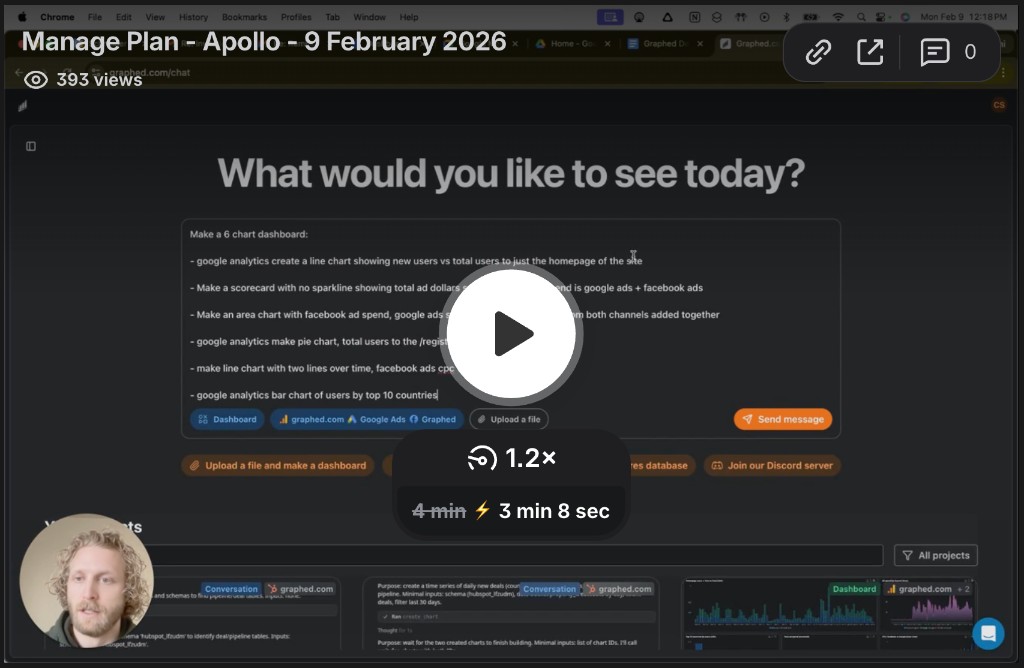
The biggest roadblock to great analysis is often the manual labor involved in pulling and combining reports from different platforms. At Graphed , we automate that entire process. You can connect your Facebook Ads, Shopify, Google Analytics, and other data sources in a few clicks. Then, you can simply ask questions in plain English - like "Compare Facebook Ads spend vs. revenue by campaign for last month" - and instantly get back dashboards and answers. We built it so you can spend your time acting on insights, not hunting for them.
Related Articles
How to Create Facebook Ads API for Claude Code
Create a Meta Marketing API access token that never expires, using a system user, so Claude Code can pull Facebook ad reports and manage campaigns.
ClickHouse vs Postgres: When to Switch to Columnar
Comparing ClickHouse vs PostgreSQL means matching storage architecture to workload. Row storage wins for transactions. Columnar wins for scan-heavy analytics.
Google Ads for Orthodontists: Get More Booked Consults
Most orthodontic Google Ads campaigns waste money on low-intent searches. The problem is structure, not the platform.